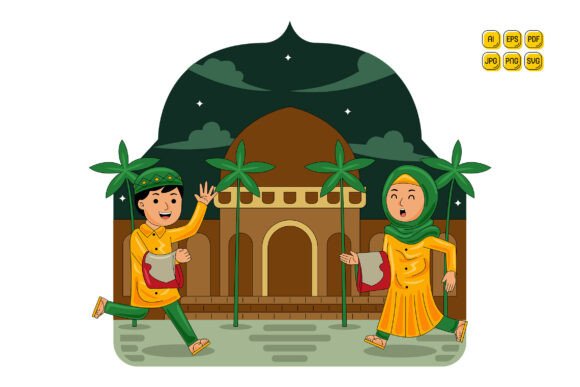
Man Walking Towards Mosque with Backpack Graphics and Illustrations
As a brand designer who has spent years helping small businesses and content creators build cohesive visual identities, I approach every new graphic asset with a mix of creative curiosity and strategic skepticism. When you are building a campaign, you do not just need pretty pictures; you need tools that communicate the right message without cluttering the visual hierarchy. Recently, I reviewed a specific illustration titled Man Walking Towards Mosque with Backpack. At first glance, it might seem like a simple icon or clipart, but when viewed through the lens of modern design and content marketing, it reveals itself as a versatile graphic design asset capable of supporting nuanced storytelling.
This review is not just about aesthetics. It is about how this illustration performs in real-world marketing scenarios. Whether you are launching a lifestyle brand, creating educational content for a niche audience, or designing promotional materials for a community event, understanding the emotional tone and practical application of your visuals is crucial. Here is my honest breakdown of how Man Walking Towards Mosque with Backpack fits into a professional workflow.
First Impressions and Emotional Tone
The moment you load this file into your design software, the mood is immediately established. The image depicts a journey. A man, equipped with a backpack, moves purposefully toward a mosque. This is not merely a depiction of architecture; it is a narrative about faith, travel, reflection, and community. For brand owners, this distinction is vital. The asset evokes feelings of serenity, dedication, and forward momentum.
In terms of audience perception, this creative design element works exceptionally well for brands that value authenticity and depth. It avoids the sterile feel of generic corporate stock photography. Instead, it offers a human-centric perspective that resonates with audiences looking for connection. If your brand is centered around wellness, spiritual growth, ethical travel, or community building, this digital product aligns perfectly with those values. It suggests movement and intention, which can subconsciously encourage viewers to engage with your content as part of their own journey.
Practical Applications in Marketing Campaigns
One of the strongest selling points of this asset is its adaptability. You can create countless variations for business branding, infographics, social media, promotion, website, landing page, banner, and other illustration purpose. Can be easily resized and change colors. This flexibility allows you to maintain visual consistency across multiple touchpoints without investing in custom illustrations for every single post.
Consider a scenario where a small business owner is launching a new line of modest fashion or travel accessories. Using Man Walking Towards Mosque with Backpack as a hero graphic for an email banner creates an immediate thematic link. The backpack symbolizes preparedness and adventure, while the mosque grounds the image in cultural significance. This combination helps in product presentation, making the offering feel more relevant and targeted to the intended demographic.
For content marketers and bloggers, this asset is invaluable for editorial design. Imagine writing a piece on mindful travel or the importance of community spaces. Inserting this SVG design or PNG design breaks up text-heavy layouts and adds a layer of professional polish. It supports content marketing goals by keeping readers engaged visually. Furthermore, because the asset can be easily resized, it works seamlessly from large desktop headers down to small mobile notifications, ensuring your brand identity remains intact regardless of the screen size.
Supporting Core Marketing Goals
Effective design is never accidental; it serves a strategic function. Here is how this specific illustration supports key marketing objectives:
- Stronger First Impression: In a crowded social media feed, unique imagery stands out. This modern design offers a distinct alternative to overused stock photos, capturing attention through its specific narrative context.
- Clearer Visual Hierarchy: The composition naturally draws the eye toward the figure and the destination. When paired with clear typography, it guides the viewer’s gaze effectively, ensuring your call-to-action is noticed.
- Better Audience Trust: High-quality, culturally respectful visuals signal professionalism. Using thoughtful design assets shows that you care about the details, which enhances audience trust and credibility.
- Emotional Connection: By tapping into themes of journey and faith, the asset fosters an emotional resonance that purely functional graphics cannot achieve. This leads to higher engagement rates and more memorable campaign visuals.
Ideal Use Cases for Creative Entrepreneurs
While this asset is versatile, it shines brightest in specific contexts. For small business branding, it is excellent for packaging accents or thank-you cards included in shipments. It adds a personal, handcrafted touch that customers appreciate. For digital sellers, it can be incorporated into Canva templates or printable planners focused on mindfulness or travel journals.
Social media managers will find this illustration particularly useful for Instagram posts and Pinterest pins. On Pinterest, where visual discovery drives traffic, the aesthetic appeal of this image can help pin performance. Similarly, for event flyers promoting local community gatherings or religious festivals, the asset provides immediate context and relevance. It also serves well as a decorative brand element in web design, adding character to landing pages without overwhelming the user interface.
Areas Requiring Strategic Caution
No single asset is perfect for every situation. As a designer, I advise using Man Walking Towards Mosque with Backpack with careful consideration in certain scenarios. It may not be suitable for formal corporate branding in industries like finance or law, where the tone needs to be strictly neutral and authoritative. Additionally, avoid placing this asset on low-contrast backgrounds or within dense information layouts where it might compete with essential data.
When used in digital ads, be mindful of text-heavy designs. The asset should complement the message, not obscure it. For overly minimal brands, ensure the detail level of the illustration matches the simplicity of the overall aesthetic. If the rest of your design is extremely sparse, a detailed illustration might look cluttered. Always test the balance before finalizing your marketing visuals.
Essential Designer Notes for Implementation
To get the most out of this commercial design resource, follow these practical steps during your production process:
- Test with Your Brand Palette: Change the colors to match your existing brand guidelines. This ensures the asset feels integrated rather than tacked on.
- Check Black and White Usage: Preview the illustration in grayscale to verify that the shapes and lines hold up without color dependency.
- Place Inside Real Mockups: Do not judge the asset in isolation. Place it inside a smartphone frame, a business card mockup, or a website header to see how it interacts with real-world elements.
- Preview on Mobile Screens: Ensure readability and impact at smaller sizes. Details that look good on a desktop monitor may disappear on a mobile device.
- Pair with Appropriate Typography: Experiment with different font styles. A clean sans-serif font often pairs well with this type of illustration for a modern look, while a serif font can add a touch of elegance and tradition.
- Confirm Licensing: Before using this asset in paid campaigns or client work, always review the commercial license to ensure compliance.
In conclusion, Man Walking Towards Mosque with Backpack is more than just a picture; it is a strategic tool for storytellers. By understanding its strengths and limitations, you can leverage this illustration to create compelling, professional, and emotionally resonant marketing materials that truly connect with your audience.